

You Will Never See this Again
NC009
| Narrative Case
You Will Never See this Again
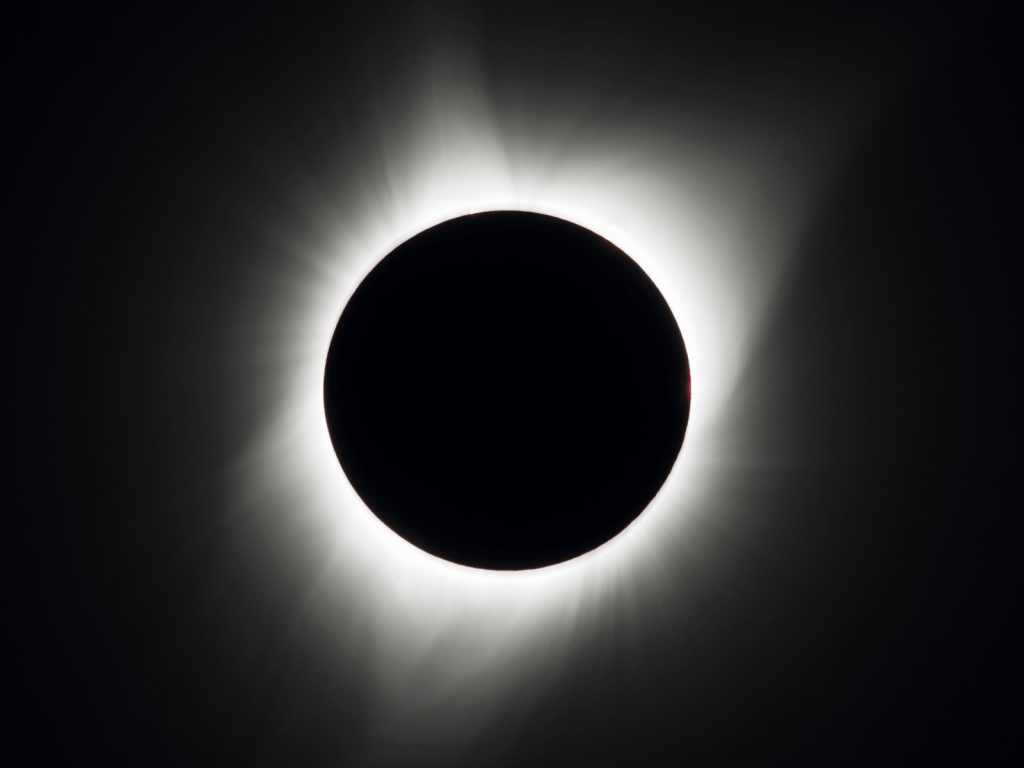
image by: Aubrey Gemignani, CC BY 2.0, via Wikimedia Commons
On 11 August 1999, there was a total eclipse in the UK, visible in Cornwall and parts of Devon.
I remember it was talked about as a once in a lifetime event, which some of us would never see again. I got so swept up in it that I bought a blank VHS tape and recorded the BBC's live coverage.
I don't have that tape anymore. I remember feeling awed.
On 12 August 2026, there was another eclipse, a partial one in Britain, while northern Spain saw a total eclipse.
This time, I watched the livestream coverage of this spectacular “once in a lifetime event” on my computer. The language was the same as it was in August 1999. “You will never see this again.” “Once in a lifetime.” They cut to a reporter in Spain with a large crowd on the beach. The reporter interviewed a British family, parents with kids somewhere between six and twelve. The parents said their children might experience this again, but they would never see it again.
I flipped to a different stream. Specialist presenters were talking through the mechanics of eclipses, with the same narrative of “Once in a lifetime.” and “You will never see this again.” Then, one of them said they have never seen a total eclipse. And almost casually, the other presenter said “the next total eclipse will be in Spain next year” and suggested the co-presenter went to see it.
This piqued my interest. The “once in a lifetime” language was an example of scarcity in narrative.
I could see two things. How rare an event it is and how accessible it could be for an individual willing to travel.
For any single fixed location on Earth, a total eclipse really is extraordinarily rare. It happens around once every 375 years on average from a random point on Earth. But globally, a total eclipse happens somewhere roughly every 18 months.
From this viewpoint, we could experience the eclipses many times over if we are happy to travel.
SOURCES
NASA, “Total Solar Eclipse of 1999 August 11” (NASA Reference Publication 1398).
Moonblink, “Total solar eclipse of 11 August 1999” (moonblink.info), where the 1999 eclipse is described as a once-in-a-lifetime chance.
Sky at Night Magazine, “How to see the partial solar eclipse over the UK and Ireland on 12 August 2026”
Instituto Geográfico Nacional (Spain), “Total solar eclipse, August 2, 2027”
Live Science, “How often do solar eclipses occur?” (reports Meeus’s 1982 figure, NASA’s 366-year refinement and the 18-month figure).