

Everyone Saw Nothing
NC003
| Narrative Case
Everyone Saw Nothing
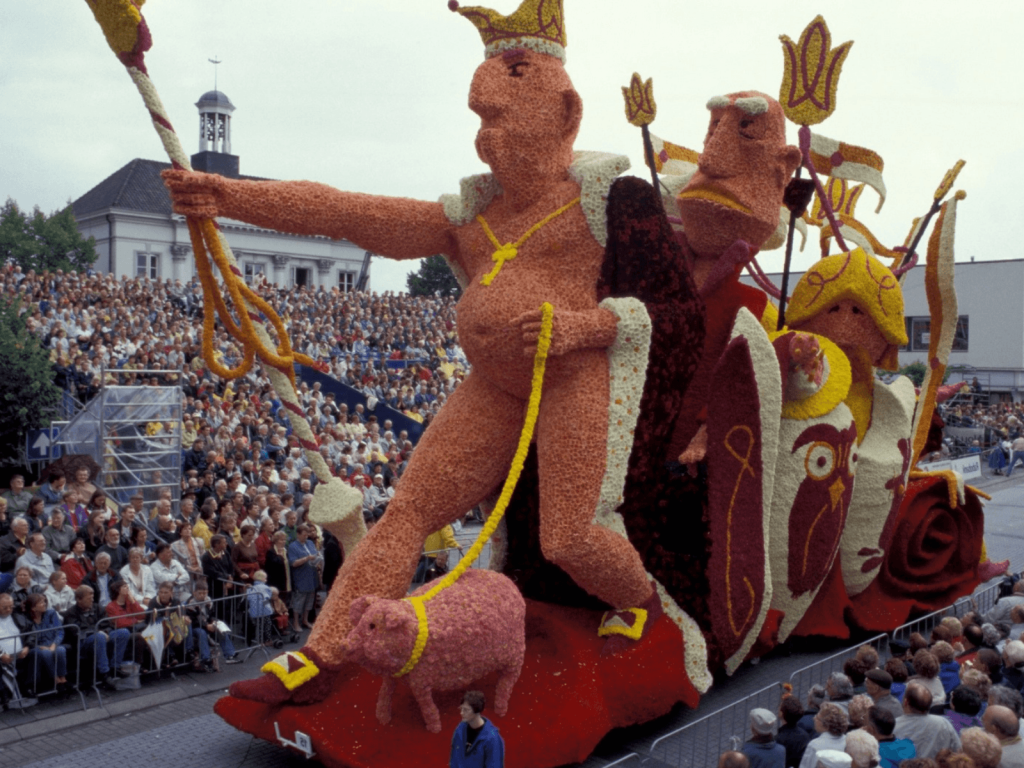
image by Van Hassel, CC BY 4.0 via Wikimedia Commons.
It was said that often, when asked about the emperor, the answer was “he is in his dressing room”.
Unlike other kings who might be thought to be out leading their soldiers, in council with his advisors or carrying out other kingly duties. The emperor loved new clothes, so much that he changed his coat every hour.
The emperor’s city was a popular destination, frequently welcoming people from everywhere.
One day two crooks entered the emperor’s town, claiming to anyone who would give them ear that they were exceptional weavers, who not only produced the finest of colours and patterns but that their clothes were so extraordinary that they were invisible to anyone unfit for their position or too stupid to see them.
Of course, the emperor who loved nothing more than new clothes immediately paid them a fortune and commissioned them to begin weaving.
Later, wanting to know how the weavers were getting on, the emperor sent a chain of his officials to check on them, starting with his old, wise and most competent minister.
One by one, they were stunned to find there was nothing on the looms. But dare they say otherwise? So, they all pretended, and described the cloth in beautiful details.
Soon word spread around town about the splendour of the cloth that eventually the emperor visited the weavers. He saw nothing either. The cloth didn’t exist. He feared if he said he couldn’t see it, that would mean he was unfit and a fool. So, instead he said the cloth was magnificent. His officials joined him in gushing about the cloth.
Eventually the "weavers" announced that the emperor's suit was ready. The emperor undressed and then the swindlers mimicked dressing him up. The emperor imagined seeing his new clothes and admired himself and then set out to show off to his people in a procession.
Though he was naked nobody told the truth.Until a little boy blurted out from the crowd, “But he’s not wearing anything”.
We see a form of Narrative Groupthink in this Hans Christian Andersen fairy tale, The Emperor's New Clothes.
Everyone privately knew there was nothing. Nothing on the loom and no clothes on the emperor, but they publicly complied with the popular narrative.
The emperor’s advisors lied first to protect their jobs and quite possibly their reputation and dignity, because getting kicked out of their noble positions in the emperor’s court for being unfit or stupid could be the end of their career and livelihood. They had a reasonable, self-protective reason to not report their findings and play along.
The crowds followed the officials blindly, well, because they were authority figures. They jubilantly praised the emperor’s new clothes to fit in. And for fear of isolation they ignored their own beliefs and mimicked each other in adoring the scarf, the coat, the magnificent train…
Breaking narrative groupthink requires an outside perspective. The child, without the social conditioning of the group, and nothing to lose from saying it out loud was able to destroy the false narrative instantly.
An emperor’s court, then a town full of individually sensible people collectively agreed not to say “there is nothing there” because they were afraid of what they could lose.
But there is always something more priceless than a possible individual ‘loss.’ The rewards of integrity and coherence with one's value can outweigh the cost of staying silent.
A narrative can do a number of things at the same time. In this case, it obscures an unfair structure, and honours something genuinely meaningful about the work. Removing the language would expose the pay gap. But would also remove one of the few things some workers have to name about what it gives back that a payslip alone cannot express.
There is no clean fix here. But it’s worth observing where a narrative, though noble, might be used to justify the conditions offered.
If you've done work that felt like a calling, has the language ever also made it harder to ask for what the work was actually worth?
SOURCES
Hans Christian Andersen, “The Emperor’s New Clothes” (1837). Retold and interpreted for narrative analysis.
The Case of
The Emperor's New Clothes
Type
Fairy Tale
Concept
Narrative Groupthink