

Worst excuse for pizza I’ve ever had
NC008
| Narrative Case
‘Worst Excuse for Pizza I've Ever Had’
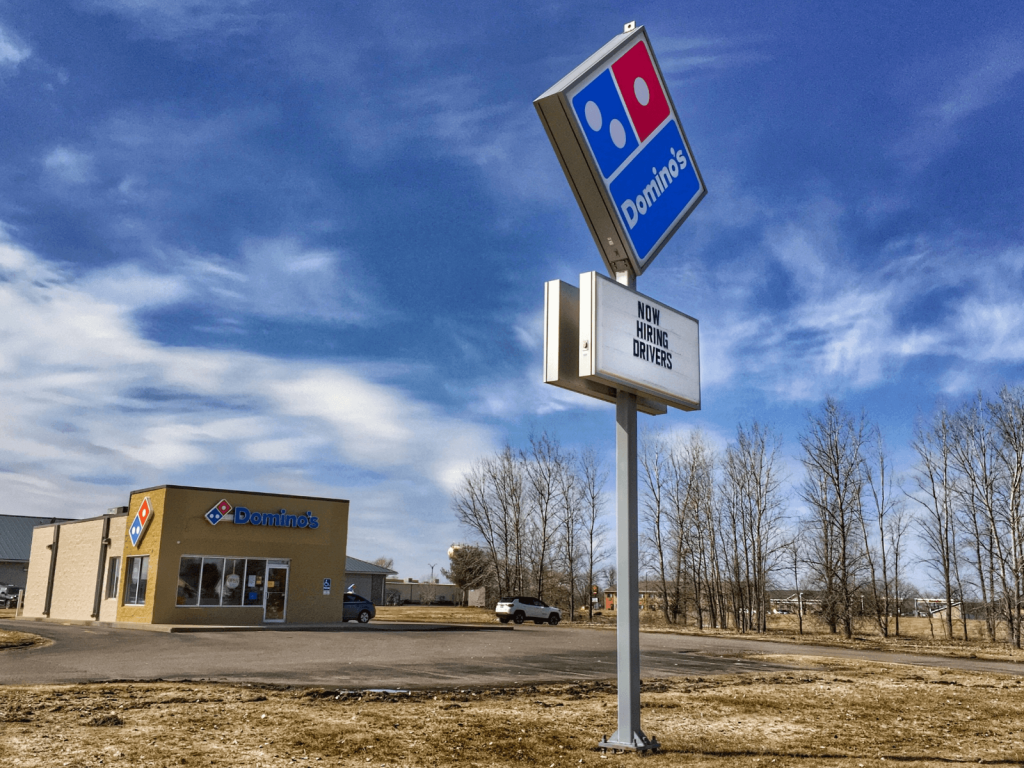
Photo by Mhuichol, CC BY-SA 4.0, via Wikimedia Commons.
In 2009 Domino's had a problem. People didn't think its pizza tasted good.
This wasn't just a few bad reviews. Domino's own research was showing that taste was one of the reasons people were no longer buying its pizza. Customers compared the crust to cardboard and the sauce to ketchup. It also came after a few difficult years. Same-store sales in the US had fallen in 2006, 2007 and again in 2008.
Domino's had built much of its reputation around delivery. It had become very good at getting pizza to people quickly and conveniently, but its research was showing that speed and delivery were no longer enough. But that taste mattered too, and this was the area where Domino's had a problem.
They spent over a year on the pizza itself, testing different combinations of sauce, cheese and crust until they arrived at a new recipe.
What they did next.
Domino's could have launched the new recipe in the way companies usually announce these things. New and improved. Better ingredients. Better taste. Or perhaps hushedly leaving the old pizza behind, hoping no one makes a fuss.
But, they made the old pizza part of the story.
They released a campaign that became known as Pizza Turnaround which showed some of the actual criticism they had received. "Worst excuse for pizza I've ever had."
The crust was compared to cardboard. The sauce to ketchup.
Domino's employees appeared in the campaign, listened to the criticism and talked about changing the pizza.
There was a risk in doing this because Domino's wasn't admitting that a campaign hadn't worked, or that it had got its packaging wrong. It was a pizza company publicly admitting that people didn't like its pizza.Sales did improve substantially afterwards. US same-store sales increased 9.9% in 2010, although it would be too simple to say that admitting the problem caused this. Domino's was making other changes to the business too.
But there is something else worth looking at in this story. Domino's could have changed the product without reconciling the story.
It could have simply presented the new pizza and allowed the old one, and what customers had said about it, to vanish and never be mentioned again.
Instead, what had been wrong with the old pizza became part of the story of why the new pizza existed.
There can be a point where the narrative we tell about who we are and the reality people are experiencing become different things. Sometimes the contradiction itself has to be acknowledged.
Domino's acknowledged the issue. They then turned the criticism that could have been damaging into a story that reconciled their narrative.
Where else have you seen a leader, company, or organisation reconcile what it says it is with what people actually experience?
SOURCES
Domino’s Pizza, Inc., “Celebrating 50th Year, Domino’s Pizza Gives Itself a Makeover”, press release (16 December 2009).
Mark Brandau, “Domino’s do-over”, Nation’s Restaurant News (8 March 2010).
Patrick Dunn, “New and Inspired”, Ann Arbor Observer (30 May 2016).
The Ringer, “How Domino’s Became the Pizza for the People” (28 February 2017).
“Domino’s: Pizza Turnaround”, Cannes Creative Lions case study, WARC (20 June 2011).
Domino’s Pizza, Inc., Annual Report (Form 10-K), fiscal 2008.
Domino’s Pizza, Inc., “Domino’s Pizza Announces 2010 Financial Results”